Nora Ephron
July 7, 2012

Nora Ephron (1941-2012)
“Above all, be the heroine of your life, not the victim.”
You know that question, who would you invite to your dinner party if you could invite absolutely anybody – real or fictional, dead or alive? Nora Ephron would be on my invite list. Sadly, at a youthful 71 years, she passed away on June 26th. Among her many movies, When Harry Met Sally, Sleepless in Seattle and You’ve Got Mail have become our generation’s comfortable favourites – like old friends we visit on occasion and then savour why we love them so: the witty humour, the poignancy, the frank authenticity. The writing is stellar and I know every one of you reading this can recite a line, or even several, or, let’s be honest, the entire script, from memory. (“I’ll have what she’s having!” ) Nora’s mother advised her that “everything is copy” and “take notes” which perhaps contributed in a small way to Nora’s striking ability to capture pitch-perfect dialogue and scenarios so authentic, many thought she’d read their minds.
Nora was not just a screenwriter and movie director, she was a novelist and essayist as well, with titles like: I Feel Bad About My Neck, Heartburn, I Remember Nothing, Wallflower at the Orgy, Crazy Salad and Scribble,Scribble. She was also known to be a devoted reader. Here are a few of her thoughts on reading:
“Reading is everything. Reading makes me feel like I’ve accomplished something, learned something, become a better person. Reading makes me smarter. Reading gives me something to talk about later on. Reading is the unbelievably healthy way my attention deficit disorder medicates itself. Reading is escape, and the opposite of escape; it’s a way to make contact with reality after a day of making things up, and it’s a way of making contact with someone else’s imagination after a day that’s all too real. Reading is grist. Reading is bliss.”
“… the state of rapture I experience when I read a wonderful book is one of the main reasons I read; but it doesn’t happen every time or even every other time, and when it does happen, I am truly beside myself.”
Arianna Huffington was a friend, and grateful to Ephron for her commitment to the Huffington Post. Read Arianna’s tribute and a collection of Nora Ephron’s HuffPo articles and blog posts here.
It has become abundantly clear that Nora Ephron was admired, respected and loved by many. So many wonderful articles have been written in her honour in recent weeks. In the words of Meg Ryan:
“Nora was an era. We pictured ourselves inside her dreams and they became ours. All wisdom, wit and sparkle lights, what a treat she was, what a blessing. I marvel again and again, what a life… To have created a simple happiness in people, to have added to the sum of delight in the world.”
If you haven’t laughed your way through them yet, perhaps you’ll make room on your bedside table or in your beach bag for one of these recent collections:


Inspiring Creativity
May 31, 2012
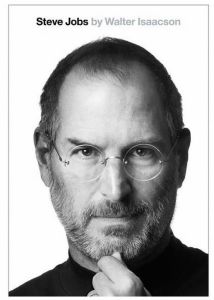
A book with buzz this year has certainly been the Steve Jobs biography by Walter Isaacson. I’d been interested in it, even gifting it, but had yet to prioritize reading it myself until a friend with excellent taste emphatically encouraged me to get to it. (Thanks Pam!) I tackled the tome (it is dauntingly lengthy) and became utterly absorbed over this past week. Chatting with others who’ve also been captivated, it was agreed that it is an obligatory read for our generation. Highly recommended.
You’ll mostly be intrigued by Steve Jobs, the man, I am certain, but you may also come away considering creativity in a new way. There has been a trend in new non-fiction relating to the topic of creativity and these two books interest me greatly:


I’m only a few chapters into InGenius and have already enjoyed several “hmmm….” moments. So fascinating! I’ve heard Jonah Lehrer interviewed on several occasions and have been thoroughly intrigued each time; he presents a more scientific approach to understanding the creative process. Both writers firmly believe that creativity can be learned and each offers guidelines to getting there in their books. Perhaps future (kinder? gentler?!) Steve Jobs’ will be inspired.
Any “creative” writing inspiring you these days?
Anna Quindlen – Viewpoint of a Mother
May 13, 2012

Anna Quindlen has a new book just in time for Mother’s Day. I’ve just finished one of her recently published novels (Every Last One) and always as I read, I am struck by her ability to capture the “voice” of motherhood. Lots of Candles and Plenty of Cake is a memoir and like so many of her treasured essays from The New York Times and Newsweek is a reflection of a reality shared by so many of us. Her website describes the content of this newest release: “From childhood memories to manic motherhood to middle age, Quindlen uses the events of her own life to illuminate our own. Along with the downsides of age, she says, can come wisdom, a perspective on life that makes it both satisfying and even joyful. So here’s to lots of candles, plenty of cake.”
In honour of Mother’s Day, I thought you might enjoy reading a son’s interview with his mom:
Anna Quindlen: An Interview with Mom
 Anna Quindlen — whose new memoir, Lots of Candles, Plenty of Cake, was published by Random House last week — is a woman of many accomplishments. Pulitzer Prize-winning journalist. Beloved novelist. Sought-after public speaker. The only author to ever have books on The New York Times‘ fiction, nonfiction, and self-help bestseller lists.
She’s also my mother, which she’d tell you is her greatest accomplishment (along with being the mother of my younger siblings, Chris and Maria). I thought, since her new book is filled with reflections on motherhood and family, who better to ask the right questions than someone who’s been around for much of the journey her memoir describes?
So I asked if I could interview her about the book and the stories behind it, and she said yes (of course). But as we sat down to talk, she was the one with the first question: “Isn’t this so weird for you? I mean, did you ever imagine that someday we’d be sitting here at the dining room table, talking about my life?” In truth, the experience was a little surreal — and nerve-wracking. We’ve had plenty of conversations about her work before, but this was different; I felt the pressure any interviewer feels, to ask the right questions to get the interviewee talking. But it turned out to be so much fun that we both quickly forgot about the unusual occasion and the tape recorder between us.
— Quindlen Krovatin
The Barnes & Noble Review: I thought we’d start with the title because I know you had a lot of difficulty arriving at a title for this book. I was hoping you could talk about the different titles you went through prior to Lots of Candles, Plenty of Cake.
Anna Quindlen: I’m not sure that any one title had traction for more than an hour when I first started writing this memoir. The problem is that the book is about so many different things. About motherhood, about friendship, about how we grow older, about how we care for ourselves and our families while we grow older. There wasn’t one title that covered the waterfront. And what I realized at a certain point was that I wanted a title that communicated, for lack of a better word, the joyfulness of the book. The exuberance. I was walking across town to have dinner with my friend, the mystery writer Linda Fairstein, and Lots of Candles, Plenty of Cake just popped into my head. Full bore. I immediately e-mailed it to my agent. She loved it. She forwarded it to my editor. She loved it. We all felt that it really captured something about the book. It captured the age aspect, but also the joyfulness. And that was the duality that we really wanted to get front and center.
BNR: But I know at one point you’d been thinking of calling it Later. Something that communicated the period of time in your life that you’d arrived at.
AQ: Right. And at one point there was some sense that we would call it Graybecause of what was going on with my hair. But none of those titles seemed to cover all of the book. I mean, the book isn’t just about the later years of my life. It’s about how the earlier years have informed those later years. I remember at a certain point my agent seized on something in the book and said, “Why don’t we call it Is 9:30 Too Early to Go to Bed?” [Laughs]
BNR: [Laughs]
AQ: The answer, of course, being “No!” [Laughs] But that was just before I came up with Lots of Candles, Plenty of Cake, and we were set.
BNR: Hadn’t there been talk about using another line from the book, I’m Too Old to Die Young Now?
AQ: Actually, when I first wrote the proposal for the book, I called it Too Old to Die Young Now, which is what I said to your sister when she was worried about something happening to me. And I really do think that in some ways it’s the quote that set me working on this. A tangible, spoken sense that I’ve crossed a line on the continuum of life. But, while I still think that’s a pretty good title, there was a sense that having the word “die” in the title didn’t necessarily work.
BNR: But even earlier, when you were first imagining the book, I remember you talking about it as Mistakes Were Made: A Memoir of Motherhood. When did…or how did you decide to move beyond motherhood to a more multi-faceted view of your life?
AQ: It was a combination of speaking that sentence to Maria — I’m too old to die young now — and then once I’d done the research that showed that in the year I was born, 1952, average life expectancy was 68. Every time I say that, even to people who pride themselves on being well informed, there’s an audible gasp. Are you sure about that? Did you double-check that? The answer is, I am absolutely sure. I triple-checked. But the idea that that was how long you got to live then, and that you get to live twelve years on average longer now, made me think about the differences in the lives of people my age from those of the generations that came before. And that seemed to me to be broader and deeper than motherhood, although clearly that’s a pivotal part of this book. It seemed to me to cry out for an explanation and an exploration of what we’re doing with this time and how our lives are defined by the fact that we’re going to live longer than any generation previously in history.
BNR: You may even live forever.
AQ: Not forever. Please, no.
BNR: Back to the title Mistakes Were Made. If you reflect on your time as a mother, what mistakes were you thinking of when you conceived of that title?
AQ: I can’t even begin to count all of the stupid, ham-handed things that I did. I mean, there was the time when your first Easter came around, and I put soaps and washcloths folded in the shape of bunnies in a basket because I didn’t want you to have chocolate.
BNR: Were you worried about my teeth?
AQ: It was a purist kind of thing. There you go. Purism often got in my way. I banned you all from watching The Simpsons for a number of years, which was clearly an error in judgment. There was the time your sister came running up to me and said she’d gotten a 98 on her test, and my response was, “Which one did you get wrong?” There was the time I ordered the food at the McDonald’s drive-thru window and then drove through without it. And there were serious times when you all got older when I responded in stereotypical ways to situations. I think that’s the biggest danger in being a mother: The impulse to massage your kids into some kind of homogenized, universally accepted form, which, if you’re smart, you know intuitively will result in nothing much down the road. But in the moment it somehow seems easier than individuating, than giving them their head, than getting out of their way.
BNR: I forget which author we were talking about, but it was an author who said that all of the books she writes are really about one theme.
AQ: Amy Bloom.
BNR: Right. Of course. I actually forget what the theme was.
AQ: I think she said love.
BNR: And you said that yours was motherhood. I think that’s absolutely true. I was going back through that box you assembled for each of us of the first editions of all of your books, and I was struck by how it’s always motherhood troubled by violence, or illness, or even just circumstance like in Blessings.
AQ: I actually think my theme is a combination of motherhood and loss, and clearly anybody who knows anything about my personal history knows where that comes from. My mother died when I was 19. In novel after novel, that emerges as a theme, most dramatically in Every Last One. It’s actually not a theme of the novel I’m working on now.
BNR: Is the protagonist a mother?
AQ: She is. But it’s not as important a part of her character as it is for most of the women I’ve written about in the past.
BNR: Because I was thinking about how even in Rise and Shine, which is one of your more lighthearted novels, Meghan Fitzmaurice’s relationship with her son, Leo, is fraught.
AQ: It’s not so true in my first novel, Object Lessons, which is more of a young person’s novel. But then once you get to One True Thing, it clearly takes hold, this dual theme of motherhood and loss. I think it was something I had to explore until I felt like I’d explored it to its fullest. And if you look at my novels, Every Last One, the most recent one, is about as far as I could go in exploring that, which is why the new one doesn’t need to be about motherhood as much.
BNR: That makes a lot of sense. How do you think having your Mom die when you were as young as you were affected how you approached being a mother?
AQ: I think it made me bound and determined to be there as much as possible. It had a lot to do with why I quit my job at the New York Times when I did, when you and Christopher were small. Which turned out to be an opportunity in disguise because that’s when I started to write my column, Life in the 30s. And it’s why I quit that column when Maria was born and took a year off with the three of you before I started the Op-Ed page column [Public and Private]. I just felt like life was short and I needed to be there. And I was haunted by the fact that my sister, your Aunt Theresa, was nine when our mother died, and she literally remembers nothing about her. And so I would look at you three, who were so central to my life, and think, I’m not even written on their DNA yet. I’ve got to be there as much as possible. I think it made me a very engaged and attentive mother.
BNR: Did your Mom’s style of being a mother, her approach to motherhood, inform how you raised us? Did you try to emulate her?
AQ: I did, but that was an interesting challenge. In terms of our characters and what was going on in our lives, my Mother and I were vastly different. Which was something that I struggled with because I loved her so much, and the idea of being different from her made me feel a little less in her eyes when I was younger. She was not a particularly educated woman. She wasn’t intellectual. She was just really good at making all five of us feel like we’d hung the moon. And that was the thing that I tried to emulate. That sense of each of your kids at various times thinking that they’re the favorite.
BNR: [Laughs]
AQ: Not that there was no favorite. But that they were the favorite. I think I tried to be as patient as I could. On sort of a cursory level, there were things I clearly tried to emulate. Having what, for my time, is considered a large family. Cooking constantly. The laughter. As I’ve written before, making my mother laugh was the be-all and end-all of my existence. You guys have cracked me up so much over the years that I feel like that’s a pay-it-forward kind of thing.
BNR: When we were growing up, she was an almost beatific figure, smiling out of black and white photos. Obviously, I never knew her, but she felt like a powerful force in our lives.
AQ: But that’s actually an unfortunate thing that we do to the dead. We turn them into plaster saint versions of themselves. We almost take away their individuality in our quest to make them perfect. So instead you get Saint Prudence of Spaghetti and Meatballs. [Laughs]
BNR: [Laughs] That’s so funny because the other day you had those old pictures out, and I don’t think I’d ever seen a picture of Grandma Prudence old before. With glasses. Because the pictures around the house are of her at her wedding. Or her holding you when you’re an infant. So seeing her as an older woman was very strange.
AQ: Well, that’s one of the interesting things about our attitudes towards aging because my mother was 41 when she died. And at the time I was both hugely bereaved but also conscious of the fact that she had lived a rich, full life. And only when I got older did I realize that she had died incredibly young. Now that I’m almost 60, I just feel like it’s tragic. I say in the book that ever since I was 19 I felt, at some level, like I was living for two. That I had to embrace every day of life because I knew that my mother would have killed to have it. And so I think my attitude about aging has been different from some of my friends because I knew the alternative.
BNR: And now that you’re beyond the age that she died, who do you turn to as a model for motherhood.
AQ: Honestly, the people who teach you how to be a good mother are your children. And one of the biggest challenges of being a good mother is to listen to them. The trick is, you can’t listen to their words. You have to read between the lines of how they’re behaving, what they’re saying, what they’re doing.
BNR: One thing I remembered in my reading of the book was that when we were growing up you would bake these incredible cakes for our birthdays. And I wanted to talk a little about the most challenging of those cakes.
AQ: [Laughs]
BNR: Was it from year one that it was important to you to make such a big deal out of our birthdays, or did that come about later.
AQ: Actually, the cakes were much more baroque when you were babies.
BNR: Like scalloped edges or…
AQ: Not the decoration. More the baking. Cakes with hazelnut mocha frosting. Very very complex cakes. Totally unnecessary.
BNR: And lost on the individuals eating them.
AQ: Although there always was that moment, because you know I was never a junk food mother, there was always that moment when one of you would dig into your cake, put a fistful in your mouth, and give me a look like, you’ve been holding out on me.
BNR: [Laughs]
AQ: It was kind of magical. But I think the birthday parties were emblematic of something else. My birthday is July 8th, which meant that I didn’t have much of a birthday celebration. If you can’t take a box of cupcakes to school, it’s almost like your birthday doesn’t exist. And the irony is, my birthday cakes were almost always presented at a restaurant down the Shore where we used to spend the summers, and they always had a sparkler in them because it was right after July 4th, which is why the sparkler on the cover of the book is really apropos. So at some point I decided that you guys would have wonderful birthdays. And as I say in the book, I took it to the limit, far past the point where the people involved were enjoying it. There were those parties with the hayrides and the clowns. There was the party I threw for Maria where I took her and her friends to the beauty salon. And the cakes only became cakes again, and not art projects, when you guys finally said, “That’s enough.”
BNR: Which was harder to decorate, the Jurassic Park cake or the Ghostbusters cake?
AQ: [Laughs] Definitely the Ghostbusters cake. Because I had to get Slimer in there in addition to the logo with that ghost in the red circle.
BNR: But who first asked not to have an elaborate cake?
AQ: You did. I remember one year I asked what you wanted on your cake. And I would always ask with trepidation because Maria would say something like, I want Belle dancing with the Beast in a ballroom with Lumiere holding a candelabra, and my heart would sink. But I asked you what you wanted on your cake, and you said you didn’t want anything, and that felt like the beginning of maturity.
BNR: How tough is that as a mother, those kind of moments? Is it bittersweet or a feeling of relief or…
AQ: It’s hard. Less hard when you have more than one child. Knowing that Christopher was still going to ask for vampires on his cake was some solace. Also, if you don’t get mired in the moment, there’s this incredible kick you get when you realize that your kid is becoming an adult. That they have really interesting opinions about books you’ve both read. That they have interesting insights into human behavior, even your own behavior, that hadn’t occurred to you before. Unless you get too invested in power and control, that notion that your son or daughter is becoming an adult is thrilling.
BNR: Now Mother’s Day is coming up soon…
AQ: What day is Mother’s Day?
BNR: [Pause]
AQ: You have no idea!
BNR: No, no. I do. I think I do. May 12th?
AQ: May 13th. I actually have to fly to Traverse City, Michigan that day to do a gig for this book tour. And I’m trying to get them to change the travel itinerary so we can at least have brunch that morning.
BNR: Because it’s one of the definitive Public and Private columns, right? “The Days of Gilded Rigatoni”. When you were away for Mother’s Day.
AQ: Exactly.
BNR: Now, just a little background, you were on book tour?
AQ: I was on book tour, and it didn’t occur to me until the schedule was locked in that I would be spending Mother’s Day in a hotel room in Seattle.
BNR: And it was upsetting for you.
AQ: Very upsetting. No mother should be eating a room service breakfast on Mother’s Day.
BNR: Well, at least you got to eat all of the breakfast.
AQ: I got to eat all of the breakfast, and I got a column out of it. But I would have preferred to spend it with you guys. Even if that meant you ate all of the bacon before I even picked up my fork.
Quindlen Krovatin is an editor at The Barnes & Noble Review. He previously worked as a reporter in the Beijing Bureau of Newsweek Magazine. He loves his Mom and promises to get her something nice for Mother’s Day.
Titanic-ish Fiction
April 10, 2012


Marvellous Matchbook Magazine
March 27, 2012


The delightfully engaging Matchbook Magazine (on-line and a MUST read) reliably fills its pages with charm and wit and inspiration and essential conversation-fillers every month. Fashion, decor, nostalgia, trivia, art and creativity, and entrepreneurism … if it existed in paper form it would be dog-eared, water warped, and have sueded pages from so much reading. There is often a List (see below) and always a May We Recommend feature with spot-on book, film and music suggestions. I read the issues on my laptop but I know there are many of you with fancy ipads and other E-readers who’d enjoy it in that format. As the calendar braces for a flip, get ready to savour an April issue soon I expect. Meanwhile, there is a healthy archive of past issues; I envy newcomers to Matchbook who can visit all those pages for the first time. Click on some of the back copies shown above or click here to get started: Matchbook Magazine
The Matchbook Girls – those who are the creative genius behind its existence – are big readers so you’ll find plenty of bookish charm throughout:

Jane Lilly Warren and Katie Armour
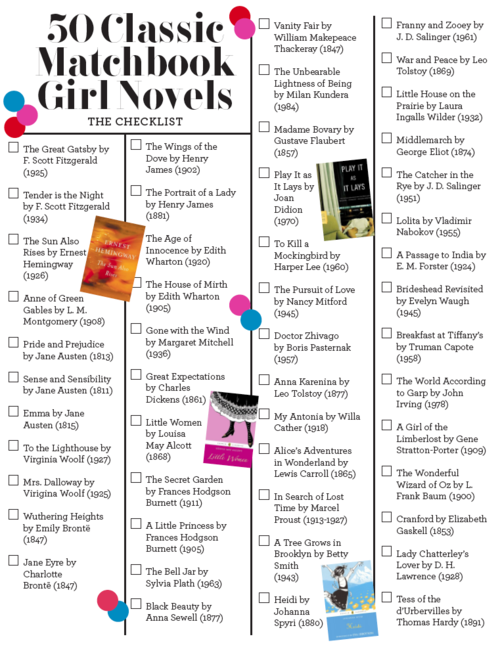
And how wonderful is this list?! How many have you knocked off (Nabokov?!)? (From the February 2012 edition – click to make larger) I adore that Heidi and Madame Bovary appear together. I’m finding myself assessing women characters in my reading as to whether they’d be considered a “Matchbook Girl” or not. Recently finished Rules of Civility by Amor Towles and believe Katey Kontent may just qualify.

Each month the issue begins with a description of The Matchbook Girl – this one from April 2011 is especially fun:

Matchbook Magazine feels like a Spring Day unto itself – hope you can make time to become acquainted as your Spring arrives.
For more on-line magazine reading visit an earlier post: Reading Magazines … on the web
And you may recall an earlier reference to Matchbook Girl in the post: Personal Manifestos
Travel with Taschen
March 6, 2012


Taschen is a publisher known for colourful and beautiful books and magazines – mostly art, design, architecture, style, or artist themed. Beautifully photographed and designed travel books also appear in their repertoire and these little gems are indeed works of art unto themselves. Whether for real-life plans or vicarious travel, they happen to be quite practical too. In the decorative boxed edition above, you will find Four Cities (New York, London, Paris and Berlin) broken down into 3 volumes each focused on: Shopping, Restaurants and Hotels. Maps with hand painted illustrations, stunning photographs and detailed descriptions of must-see and memorable sites are throughout.
Another recently published Taschen travel adventure is The New York Times “36 Hours”: 150 Weekends in the USA & Canada.

This would be another perfect travel planning companion – if no plans yet in motion, here’s the inspiration!
From the Publisher: “The NYT has been offering up dream weekends with practical itineraries in its popular weekly “36 Hours” column since 2002. Over the years, the column’s writers have brought careful research, insider’s knowledge, and a sense of fun to hundreds of cities and destinations, always with an eye to getting the most out of a short trip. Its photographers have gone along, capturing the images that tell more of the story.”
Excursions are illustrated with gorgeous photos and detailed itineraries – the off-the-beaten-track surprises are featured alongside the landmark tourist draws.
Both of these Taschen travel publications are worth adding to your “pretty book” collection or presenting as a gift to a special person.
Happy trails!
Devoted to Downton?
February 27, 2012

In the event there is a rare soul among you who has not yet heard of the phenomenon of “Downton Abbey”, a quick introduction: Downton Abbey is a period drama, written by Julian Fowles, shown on Masterpiece television (PBS) , and presently in its second season. And it’s sooooo much more! The characters, the sagas, the fashions, the wit of Maggie Smith, the interiors, the scenery, the history, the romance, the manners, the drama, the wit of Maggie Smith … all contribute to decadently absorbing viewing. As you have gleaned, Maggie Smith is one of the most fabulous characters – she plays Lady Violet, Dowager Countess of Grantham with saucy sarcasm and facial expressions to keep you wishing she was in every scene; she will make you cringe and laugh out loud in equal measure. It is all such great entertainment. Something this good must have a literary bent, right?

Well … Downton creator Julian Fellowes is the author of the novels Snobs, and Past Imperfect as well as writer of the screenplay for the movie Gosford Park. He is particularly respected for capturing the essence of an era – especially in manners and subtleties of communication. Fellowes’ hugely successful Downton Abbey has spurred enormous interest in reading of the era: non-fiction and fiction. There are pages of Google entries with the listing “If you like Downton Abbey, you’ll love reading these titles …” Here are some of the suggestions:


Enjoy the viewing and the reading. I leave you with a little clip of marvellous Maggie.
Reading Russian
February 19, 2012
Geographical trends seem to occur in books, don’t you find? For a while, there was a rash of “India” writing (A Suitable Boy, A Fine Balance …) and then stories set in China or Hong Kong (Snowflower and the Secret Fan, The Piano Teacher …) My former book club read a number of stories set in Africa until consensus had us move on – to the UK. Well, I’ve noted a recent trend to reading Russian. I read the classic Anna Karenina and Doctor Zhivago years ago but recently finished The True Memoirs of Little K and A Mountain of Crumbs – I enjoyed them all. Such an intriguing history and fascinating characters making their way through it. In only the past few months/weeks The Winter Palace, Catherine the Great, Enchantments, and The Little Russian have all been released. Each one looks appealing to me so it appears another literary trip to Russia could be in the works! (As usual, click on the image to be taken to a website with more information about the book.) Where have your books been taking you?


Happy New Year – Good Reading Ahead!
January 3, 2012

Happy New Year to you all … and yes, a wish as well for a year of good reading ahead!
To give you a little kick-start, here are a few articles I’ve enjoyed on-line in recent weeks – just click on the link and read away!
How many of you have crossed over to the e-reader side? Were you the recipient of an e-reader gift this Christmas? I’ve not surrendered but admit to being tempted. I enjoyed Daphne Bramham of the Vancouver Sun’s take on her e-reader experience here.
Katherine Paterson, recent US National Ambassador for Young People’s Literature and author of Bridge to Terabithia and Jacob Have I Loved, reviews her tenure in a moving article here in the Huffington Post.
Read about the true life inspiration for the beloved novel National Velvet: Enid Bagnold’s daughter and British First Lady Samantha Cameron’s great-aunt, Laurian, Comtesse d’Harcourt. Liz Hunt’s article in the Telegraph beautifully captures the lady and the fascinating life she’s lived. Ah the trivia!
Did you manage to read some good books over the holidays? Let me/us know which ones were hits. I’ve been in a bit of a slump lately – haven’t read a “love-it!” book for a while so I’m all ears.
And finally, a lovely quote to read at the start of a year from the short story The Curious Case of Benjamin Button by F. Scott Fitzgerald:

The Greatest Gift: A Wonderful Life
December 18, 2011

Before there was “It’s A Wonderful Life” (the movie that’s become a heartwarming Christmas classic starring Jimmy Stewart and Donna Reed) there was a charming little short story that seemed destined never to be read.
Philip Van Doren Stern was a writer and editor with particular expertise on the topic of the Civil War. One morning he awoke having had a strikingly clear dream about a suicidal man who was given an opportunity to view what life would have been like for those he loved had he not lived to impact their lives. Van Doren Stern quickly wrote down the dream in its entirety and then, over the following few years, worked it into a short story he called “The Greatest Gift”. When he believed it was ready to share, he distributed the story in hopes of publication but was met with unanimous rejection. Finally, during World War II, he printed 200 copies himself and distributed them as Christmas cards to friends and family. By chance, a Producer at RKO pictures had a chance to read the short story and was immediately motivated to purchase its film rights. At about the same time, Good Housekeeping magazine printed the story in their January 1945 issue with the title, “The Man Who Was Never Born”. In 1945, RKO sold the film rights again to Frank Capra who created the movie “It’s a Wonderful Life”, released in 1946. “It’s a Wonderful Life” did not enjoy box office success at all but still managed to be nominated for 5 Oscars – it won none. The movie faded away until the early 1970s when a clerical oversight resulted in a failure to renew the film’s copyright. It entered public domain and was promptly picked up by television networks whose frequent seasonal airings turned it into the classic it is now considered.
This holiday season, Graphic Image has issued a limited edition hard cover reproduction of Van Doren Stern’s first self-printed pamphlet which he shared with his friends. It’s a beautiful little book and can even be purchased in a fancy red leather collectible version. Take a peek at it here on the Graphic Image website. What a wonderful Christmas gift for your friends.
I love when a book is the star of the story!
I hope you’re finding time during this week to enjoy a few holiday classics – either in written or movie form.