You’re Not Special – A Commencement Address
June 30, 2012

Great quotes are often drawn from commencement addresses; the occasion of graduation itself inspires heartfelt and thoughtful sentiment and wisdom. Every year there are a few outstanding messages but this year, one really stood out: David McCullough Jr., an English teacher (and son of writer David McCullough), spoke to the graduates of Wellesley High School in Massachusetts on June 1st and struck a resounding chord. Not one, but many quotes will likely endure from this honest lesson. An excerpt of the text is here for you to enjoy. A video of the entire address appears below.
“You are not special. You are not exceptional.
Contrary to what your u9 soccer trophy suggests, your glowing seventh grade report card, despite every assurance of a certain corpulent purple dinosaur, that nice Mister Rogers and your batty Aunt Sylvia, no matter how often your maternal caped crusader has swooped in to save you… you’re nothing special.
Yes, you’ve been pampered, cosseted, doted upon, helmeted, bubble-wrapped. Yes, capable adults with other things to do have held you, kissed you, fed you, wiped your mouth, wiped your bottom, trained you, taught you, tutored you, coached you, listened to you, counseled you, encouraged you, consoled you and encouraged you again. You’ve been nudged, cajoled, wheedled and implored. You’ve been feted and fawned over and called sweetie pie. Yes, you have. And, certainly, we’ve been to your games, your plays, your recitals, your science fairs. Absolutely, smiles ignite when you walk into a room, and hundreds gasp with delight at your every tweet. … And now you’ve conquered high school… and, indisputably, here we all have gathered for you, the pride and joy of this fine community, the first to emerge from that magnificent new building…
But do not get the idea you’re anything special. Because you’re not.
The empirical evidence is everywhere, numbers even an English teacher can’t ignore. Newton, Natick, Nee… I am allowed to say Needham, yes? …that has to be two thousand high school graduates right there, give or take, and that’s just the neighborhood Ns. Across the country no fewer than 3.2 million seniors are graduating about now from more than 37,000 high schools. That’s 37,000 valedictorians… 37,000 class presidents… 92,000 harmonizing altos… 340,000 swaggering jocks… 2,185,967 pairs of Uggs. But why limit ourselves to high school? After all, you’re leaving it. So think about this: even if you’re one in a million, on a planet of 6.8 billion that means there are nearly 7,000 people just like you. Imagine standing somewhere over there on Washington Street on Marathon Monday and watching sixty-eight hundred yous go running by. And consider for a moment the bigger picture: your planet, I’ll remind you, is not the center of its solar system, your solar system is not the center of its galaxy, your galaxy is not the center of the universe. In fact, astrophysicists assure us the universe has no center; therefore, you cannot be it. Neither can Donald Trump… which someone should tell him… although that hair is quite a phenomenon.
“But, Dave,” you cry, “Walt Whitman tells me I’m my own version of perfection! Epictetus tells me I have the spark of Zeus!” And I don’t disagree. So that makes 6.8 billion examples of perfection, 6.8 billion sparks of Zeus. You see, if everyone is special, then no one is. If everyone gets a trophy, trophies become meaningless. In our unspoken but not so subtle Darwinian competition with one another–which springs, I think, from our fear of our own insignificance, a subset of our dread of mortality — we have of late, we Americans, to our detriment, come to love accolades more than genuine achievement. We have come to see them as the point — and we’re happy to compromise standards, or ignore reality, if we suspect that’s the quickest way, or only way, to have something to put on the mantelpiece, something to pose with, crow about, something with which to leverage ourselves into a better spot on the social totem pole. No longer is it how you play the game, no longer is it even whether you win or lose, or learn or grow, or enjoy yourself doing it… Now it’s “So what does this get me?” As a consequence, we cheapen worthy endeavors, and building a Guatemalan medical clinic becomes more about the application to Bowdoin than the well-being of Guatemalans. It’s an epidemic — and in its way, not even dear old Wellesley High is immune… one of the best of the 37,000 nationwide, Wellesley High School… where good is no longer good enough, where a B is the new C, and the midlevel curriculum is called Advanced College Placement. And I hope you caught me when I said “one of the best.” I said “one of the best” so we can feel better about ourselves, so we can bask in a little easy distinction, however vague and unverifiable, and count ourselves among the elite, whoever they might be, and enjoy a perceived leg up on the perceived competition. But the phrase defies logic. By definition there can be only one best. You’re it or you’re not.
If you’ve learned anything in your years here I hope it’s that education should be for, rather than material advantage, the exhilaration of learning. You’ve learned, too, I hope, as Sophocles assured us, that wisdom is the chief element of happiness. (Second is ice cream… just an fyi) I also hope you’ve learned enough to recognize how little you know… how little you know now… at the moment… for today is just the beginning. It’s where you go from here that matters.
As you commence, then, and before you scatter to the winds, I urge you to do whatever you do for no reason other than you love it and believe in its importance. Don’t bother with work you don’t believe in any more than you would a spouse you’re not crazy about, lest you too find yourself on the wrong side of a Baltimore Orioles comparison. Resist the easy comforts of complacency, the specious glitter of materialism, the narcotic paralysis of self-satisfaction. Be worthy of your advantages. And read… read all the time… read as a matter of principle, as a matter of self-respect. Read as a nourishing staple of life. Develop and protect a moral sensibility and demonstrate the character to apply it. Dream big. Work hard. Think for yourself. Love everything you love, everyone you love, with all your might. And do so, please, with a sense of urgency, for every tick of the clock subtracts from fewer and fewer; and as surely as there are commencements there are cessations, and you’ll be in no condition to enjoy the ceremony attendant to that eventuality no matter how delightful the afternoon.
The fulfilling life, the distinctive life, the relevant life, is an achievement, not something that will fall into your lap because you’re a nice person or mommy ordered it from the caterer. You’ll note the founding fathers took pains to secure your inalienable right to life, liberty and the pursuit of happiness–quite an active verb, “pursuit”–which leaves, I should think, little time for lying around watching parrots rollerskate on Youtube. The first President Roosevelt, the old rough rider, advocated the strenuous life. Mr. Thoreau wanted to drive life into a corner, to live deep and suck out all the marrow. The poet Mary Oliver tells us to row, row into the swirl and roil. Locally, someone… I forget who… from time to time encourages young scholars to carpe the heck out of the diem. The point is the same: get busy, have at it. Don’t wait for inspiration or passion to find you. Get up, get out, explore, find it yourself, and grab hold with both hands. (Now, before you dash off and get your YOLO tattoo, let me point out the illogic of that trendy little expression–because you can and should live not merely once, but every day of your life. Rather than You Only Live Once, it should be You Live Only Once… but because YLOO doesn’t have the same ring, we shrug and decide it doesn’t matter.)
None of this day-seizing, though, this YLOOing, should be interpreted as license for self-indulgence. Like accolades ought to be, the fulfilled life is a consequence, a gratifying byproduct. It’s what happens when you’re thinking about more important things. Climb the mountain not to plant your flag, but to embrace the challenge, enjoy the air and behold the view. Climb it so you can see the world, not so the world can see you. Go to Paris to be in Paris, not to cross it off your list and congratulate yourself for being worldly. Exercise free will and creative, independent thought not for the satisfactions they will bring you, but for the good they will do others, the rest of the 6.8 billion–and those who will follow them. And then you too will discover the great and curious truth of the human experience is that selflessness is the best thing you can do for yourself. The sweetest joys of life, then, come only with the recognition that you’re not special.
Because everyone is.
Congratulations. Good luck. Make for yourselves, please, for your sake and for ours, extraordinary lives.”
Peonies and Mary Oliver poetry
June 15, 2012

Peonies
This morning the green fists of the peonies are getting ready
to break my heart
as the sun rises,
as the sun strokes them with his old, buttery fingers
and they open —
pools of lace,
white and pink —
and all day the black ants climb over them,
boring their deep and mysterious holes
into the curls,
craving the sweet sap,
taking it away
to their dark, underground cities —
and all day
under the shifty wind,
as in a dance to the great wedding,
the flowers bend their bright bodies,
and tip their fragrance to the air,
and rise,
their red stems holding
all that dampness and recklessness
gladly and lightly,
and there it is again —
beauty the brave, the exemplary,
blazing open.
Do you love this world?
Do you cherish your humble and silky life?
Do you adore the green grass, with its terror beneath?
Do you also hurry, half-dressed and barefoot, into the garden,
and softly,
and exclaiming of their dearness,
fill your arms with the white and pink flowers,
with their honeyed heaviness, their lush trembling,
their eagerness
to be wild and perfect for a moment, before they are
nothing, forever?
(from New And Selected Poems by Mary Oliver)
I discovered Mary Oliver through this interview with Maria Shriver and have been a fan ever since. Today we’ll post about peonies; Mary will have a post of her own another day soon!
Summer Reading
June 3, 2012

A few of you kind souls have shared with me that you visit Bedside Table Books on your phones when you’re standing in front of the bookshelf in a store or library … that you drop in to the site to find a few recommended titles. If this sounds like you, then bookmark this entry. I dedicate the following list to the shelf-stalkers!
It’s that time of year again – the Summer Reading Lists are emerging everywhere in the media, on-line and off. I’ve been collecting titles that have piqued my interest in some way for months now and thought I’d just post the whole darn catalogue here for you to ponder along with me. Now a few of these are sooo fresh off the press that they haven’t quite made it to the shelves yet so be patient – a list this long is going to take us a while to get through, maybe until next summer! Some seem plain old fun (beach worthy) and some seem thought-provoking (for rainy days) – the whole gamut. So dust off ye olde beach bag and start packing!
Please feel welcome to add your own recommendations and discoveries in the Comments! (As always, click on the cover to learn more about the book)


Remember Beachy Book recommendations from last year? Refresh your memory here.
Inspiring Creativity
May 31, 2012
A book with buzz this year has certainly been the Steve Jobs biography by Walter Isaacson. I’d been interested in it, even gifting it, but had yet to prioritize reading it myself until a friend with excellent taste emphatically encouraged me to get to it. (Thanks Pam!) I tackled the tome (it is dauntingly lengthy) and became utterly absorbed over this past week. Chatting with others who’ve also been captivated, it was agreed that it is an obligatory read for our generation. Highly recommended.
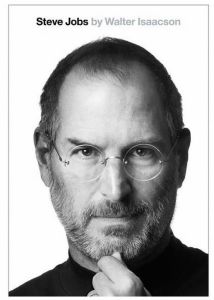
You’ll mostly be intrigued by Steve Jobs, the man, I am certain, but you may also come away considering creativity in a new way. There has been a trend in new non-fiction relating to the topic of creativity and these two books interest me greatly:


I’m only a few chapters into InGenius and have already enjoyed several “hmmm….” moments. So fascinating! I’ve heard Jonah Lehrer interviewed on several occasions and have been thoroughly intrigued each time; he presents a more scientific approach to understanding the creative process. Both writers firmly believe that creativity can be learned and each offers guidelines to getting there in their books. Perhaps future (kinder? gentler?!) Steve Jobs’ will be inspired.
Any “creative” writing inspiring you these days?
Curly Girl
May 20, 2012
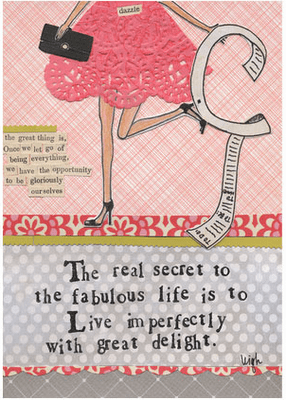
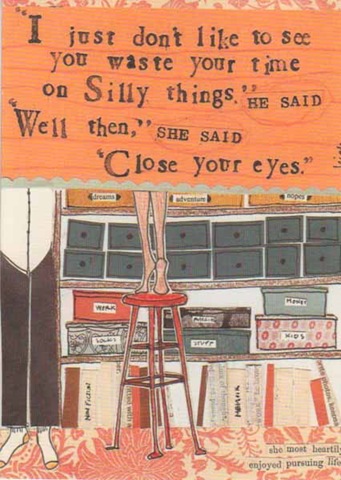
Some time ago I promised I would dedicate an entire post to the wonders of “Curly Girl” (aka Leigh Standley) and her inspired use of words and phrasing to complement her delightful artwork. Here ye have it! All of these whimsical images with their accompanying words of wisdom are available as greeting cards (widely available) while on the Curly Girl Designs website you’ll find many more incarnations of her work: posters, mugs, iphone covers, calendars, journals etc. These images are but a few of her huge selection – something perfect for every occasion or just for your own inspiration. Enjoy!



Anna Quindlen – Viewpoint of a Mother
May 13, 2012

Anna Quindlen has a new book just in time for Mother’s Day. I’ve just finished one of her recently published novels (Every Last One) and always as I read, I am struck by her ability to capture the “voice” of motherhood. Lots of Candles and Plenty of Cake is a memoir and like so many of her treasured essays from The New York Times and Newsweek is a reflection of a reality shared by so many of us. Her website describes the content of this newest release: “From childhood memories to manic motherhood to middle age, Quindlen uses the events of her own life to illuminate our own. Along with the downsides of age, she says, can come wisdom, a perspective on life that makes it both satisfying and even joyful. So here’s to lots of candles, plenty of cake.”
In honour of Mother’s Day, I thought you might enjoy reading a son’s interview with his mom:
Anna Quindlen: An Interview with Mom
 Anna Quindlen — whose new memoir, Lots of Candles, Plenty of Cake, was published by Random House last week — is a woman of many accomplishments. Pulitzer Prize-winning journalist. Beloved novelist. Sought-after public speaker. The only author to ever have books on The New York Times‘ fiction, nonfiction, and self-help bestseller lists.
She’s also my mother, which she’d tell you is her greatest accomplishment (along with being the mother of my younger siblings, Chris and Maria). I thought, since her new book is filled with reflections on motherhood and family, who better to ask the right questions than someone who’s been around for much of the journey her memoir describes?
So I asked if I could interview her about the book and the stories behind it, and she said yes (of course). But as we sat down to talk, she was the one with the first question: “Isn’t this so weird for you? I mean, did you ever imagine that someday we’d be sitting here at the dining room table, talking about my life?” In truth, the experience was a little surreal — and nerve-wracking. We’ve had plenty of conversations about her work before, but this was different; I felt the pressure any interviewer feels, to ask the right questions to get the interviewee talking. But it turned out to be so much fun that we both quickly forgot about the unusual occasion and the tape recorder between us.
— Quindlen Krovatin
The Barnes & Noble Review: I thought we’d start with the title because I know you had a lot of difficulty arriving at a title for this book. I was hoping you could talk about the different titles you went through prior to Lots of Candles, Plenty of Cake.
Anna Quindlen: I’m not sure that any one title had traction for more than an hour when I first started writing this memoir. The problem is that the book is about so many different things. About motherhood, about friendship, about how we grow older, about how we care for ourselves and our families while we grow older. There wasn’t one title that covered the waterfront. And what I realized at a certain point was that I wanted a title that communicated, for lack of a better word, the joyfulness of the book. The exuberance. I was walking across town to have dinner with my friend, the mystery writer Linda Fairstein, and Lots of Candles, Plenty of Cake just popped into my head. Full bore. I immediately e-mailed it to my agent. She loved it. She forwarded it to my editor. She loved it. We all felt that it really captured something about the book. It captured the age aspect, but also the joyfulness. And that was the duality that we really wanted to get front and center.
BNR: But I know at one point you’d been thinking of calling it Later. Something that communicated the period of time in your life that you’d arrived at.
AQ: Right. And at one point there was some sense that we would call it Graybecause of what was going on with my hair. But none of those titles seemed to cover all of the book. I mean, the book isn’t just about the later years of my life. It’s about how the earlier years have informed those later years. I remember at a certain point my agent seized on something in the book and said, “Why don’t we call it Is 9:30 Too Early to Go to Bed?” [Laughs]
BNR: [Laughs]
AQ: The answer, of course, being “No!” [Laughs] But that was just before I came up with Lots of Candles, Plenty of Cake, and we were set.
BNR: Hadn’t there been talk about using another line from the book, I’m Too Old to Die Young Now?
AQ: Actually, when I first wrote the proposal for the book, I called it Too Old to Die Young Now, which is what I said to your sister when she was worried about something happening to me. And I really do think that in some ways it’s the quote that set me working on this. A tangible, spoken sense that I’ve crossed a line on the continuum of life. But, while I still think that’s a pretty good title, there was a sense that having the word “die” in the title didn’t necessarily work.
BNR: But even earlier, when you were first imagining the book, I remember you talking about it as Mistakes Were Made: A Memoir of Motherhood. When did…or how did you decide to move beyond motherhood to a more multi-faceted view of your life?
AQ: It was a combination of speaking that sentence to Maria — I’m too old to die young now — and then once I’d done the research that showed that in the year I was born, 1952, average life expectancy was 68. Every time I say that, even to people who pride themselves on being well informed, there’s an audible gasp. Are you sure about that? Did you double-check that? The answer is, I am absolutely sure. I triple-checked. But the idea that that was how long you got to live then, and that you get to live twelve years on average longer now, made me think about the differences in the lives of people my age from those of the generations that came before. And that seemed to me to be broader and deeper than motherhood, although clearly that’s a pivotal part of this book. It seemed to me to cry out for an explanation and an exploration of what we’re doing with this time and how our lives are defined by the fact that we’re going to live longer than any generation previously in history.
BNR: You may even live forever.
AQ: Not forever. Please, no.
BNR: Back to the title Mistakes Were Made. If you reflect on your time as a mother, what mistakes were you thinking of when you conceived of that title?
AQ: I can’t even begin to count all of the stupid, ham-handed things that I did. I mean, there was the time when your first Easter came around, and I put soaps and washcloths folded in the shape of bunnies in a basket because I didn’t want you to have chocolate.
BNR: Were you worried about my teeth?
AQ: It was a purist kind of thing. There you go. Purism often got in my way. I banned you all from watching The Simpsons for a number of years, which was clearly an error in judgment. There was the time your sister came running up to me and said she’d gotten a 98 on her test, and my response was, “Which one did you get wrong?” There was the time I ordered the food at the McDonald’s drive-thru window and then drove through without it. And there were serious times when you all got older when I responded in stereotypical ways to situations. I think that’s the biggest danger in being a mother: The impulse to massage your kids into some kind of homogenized, universally accepted form, which, if you’re smart, you know intuitively will result in nothing much down the road. But in the moment it somehow seems easier than individuating, than giving them their head, than getting out of their way.
BNR: I forget which author we were talking about, but it was an author who said that all of the books she writes are really about one theme.
AQ: Amy Bloom.
BNR: Right. Of course. I actually forget what the theme was.
AQ: I think she said love.
BNR: And you said that yours was motherhood. I think that’s absolutely true. I was going back through that box you assembled for each of us of the first editions of all of your books, and I was struck by how it’s always motherhood troubled by violence, or illness, or even just circumstance like in Blessings.
AQ: I actually think my theme is a combination of motherhood and loss, and clearly anybody who knows anything about my personal history knows where that comes from. My mother died when I was 19. In novel after novel, that emerges as a theme, most dramatically in Every Last One. It’s actually not a theme of the novel I’m working on now.
BNR: Is the protagonist a mother?
AQ: She is. But it’s not as important a part of her character as it is for most of the women I’ve written about in the past.
BNR: Because I was thinking about how even in Rise and Shine, which is one of your more lighthearted novels, Meghan Fitzmaurice’s relationship with her son, Leo, is fraught.
AQ: It’s not so true in my first novel, Object Lessons, which is more of a young person’s novel. But then once you get to One True Thing, it clearly takes hold, this dual theme of motherhood and loss. I think it was something I had to explore until I felt like I’d explored it to its fullest. And if you look at my novels, Every Last One, the most recent one, is about as far as I could go in exploring that, which is why the new one doesn’t need to be about motherhood as much.
BNR: That makes a lot of sense. How do you think having your Mom die when you were as young as you were affected how you approached being a mother?
AQ: I think it made me bound and determined to be there as much as possible. It had a lot to do with why I quit my job at the New York Times when I did, when you and Christopher were small. Which turned out to be an opportunity in disguise because that’s when I started to write my column, Life in the 30s. And it’s why I quit that column when Maria was born and took a year off with the three of you before I started the Op-Ed page column [Public and Private]. I just felt like life was short and I needed to be there. And I was haunted by the fact that my sister, your Aunt Theresa, was nine when our mother died, and she literally remembers nothing about her. And so I would look at you three, who were so central to my life, and think, I’m not even written on their DNA yet. I’ve got to be there as much as possible. I think it made me a very engaged and attentive mother.
BNR: Did your Mom’s style of being a mother, her approach to motherhood, inform how you raised us? Did you try to emulate her?
AQ: I did, but that was an interesting challenge. In terms of our characters and what was going on in our lives, my Mother and I were vastly different. Which was something that I struggled with because I loved her so much, and the idea of being different from her made me feel a little less in her eyes when I was younger. She was not a particularly educated woman. She wasn’t intellectual. She was just really good at making all five of us feel like we’d hung the moon. And that was the thing that I tried to emulate. That sense of each of your kids at various times thinking that they’re the favorite.
BNR: [Laughs]
AQ: Not that there was no favorite. But that they were the favorite. I think I tried to be as patient as I could. On sort of a cursory level, there were things I clearly tried to emulate. Having what, for my time, is considered a large family. Cooking constantly. The laughter. As I’ve written before, making my mother laugh was the be-all and end-all of my existence. You guys have cracked me up so much over the years that I feel like that’s a pay-it-forward kind of thing.
BNR: When we were growing up, she was an almost beatific figure, smiling out of black and white photos. Obviously, I never knew her, but she felt like a powerful force in our lives.
AQ: But that’s actually an unfortunate thing that we do to the dead. We turn them into plaster saint versions of themselves. We almost take away their individuality in our quest to make them perfect. So instead you get Saint Prudence of Spaghetti and Meatballs. [Laughs]
BNR: [Laughs] That’s so funny because the other day you had those old pictures out, and I don’t think I’d ever seen a picture of Grandma Prudence old before. With glasses. Because the pictures around the house are of her at her wedding. Or her holding you when you’re an infant. So seeing her as an older woman was very strange.
AQ: Well, that’s one of the interesting things about our attitudes towards aging because my mother was 41 when she died. And at the time I was both hugely bereaved but also conscious of the fact that she had lived a rich, full life. And only when I got older did I realize that she had died incredibly young. Now that I’m almost 60, I just feel like it’s tragic. I say in the book that ever since I was 19 I felt, at some level, like I was living for two. That I had to embrace every day of life because I knew that my mother would have killed to have it. And so I think my attitude about aging has been different from some of my friends because I knew the alternative.
BNR: And now that you’re beyond the age that she died, who do you turn to as a model for motherhood.
AQ: Honestly, the people who teach you how to be a good mother are your children. And one of the biggest challenges of being a good mother is to listen to them. The trick is, you can’t listen to their words. You have to read between the lines of how they’re behaving, what they’re saying, what they’re doing.
BNR: One thing I remembered in my reading of the book was that when we were growing up you would bake these incredible cakes for our birthdays. And I wanted to talk a little about the most challenging of those cakes.
AQ: [Laughs]
BNR: Was it from year one that it was important to you to make such a big deal out of our birthdays, or did that come about later.
AQ: Actually, the cakes were much more baroque when you were babies.
BNR: Like scalloped edges or…
AQ: Not the decoration. More the baking. Cakes with hazelnut mocha frosting. Very very complex cakes. Totally unnecessary.
BNR: And lost on the individuals eating them.
AQ: Although there always was that moment, because you know I was never a junk food mother, there was always that moment when one of you would dig into your cake, put a fistful in your mouth, and give me a look like, you’ve been holding out on me.
BNR: [Laughs]
AQ: It was kind of magical. But I think the birthday parties were emblematic of something else. My birthday is July 8th, which meant that I didn’t have much of a birthday celebration. If you can’t take a box of cupcakes to school, it’s almost like your birthday doesn’t exist. And the irony is, my birthday cakes were almost always presented at a restaurant down the Shore where we used to spend the summers, and they always had a sparkler in them because it was right after July 4th, which is why the sparkler on the cover of the book is really apropos. So at some point I decided that you guys would have wonderful birthdays. And as I say in the book, I took it to the limit, far past the point where the people involved were enjoying it. There were those parties with the hayrides and the clowns. There was the party I threw for Maria where I took her and her friends to the beauty salon. And the cakes only became cakes again, and not art projects, when you guys finally said, “That’s enough.”
BNR: Which was harder to decorate, the Jurassic Park cake or the Ghostbusters cake?
AQ: [Laughs] Definitely the Ghostbusters cake. Because I had to get Slimer in there in addition to the logo with that ghost in the red circle.
BNR: But who first asked not to have an elaborate cake?
AQ: You did. I remember one year I asked what you wanted on your cake. And I would always ask with trepidation because Maria would say something like, I want Belle dancing with the Beast in a ballroom with Lumiere holding a candelabra, and my heart would sink. But I asked you what you wanted on your cake, and you said you didn’t want anything, and that felt like the beginning of maturity.
BNR: How tough is that as a mother, those kind of moments? Is it bittersweet or a feeling of relief or…
AQ: It’s hard. Less hard when you have more than one child. Knowing that Christopher was still going to ask for vampires on his cake was some solace. Also, if you don’t get mired in the moment, there’s this incredible kick you get when you realize that your kid is becoming an adult. That they have really interesting opinions about books you’ve both read. That they have interesting insights into human behavior, even your own behavior, that hadn’t occurred to you before. Unless you get too invested in power and control, that notion that your son or daughter is becoming an adult is thrilling.
BNR: Now Mother’s Day is coming up soon…
AQ: What day is Mother’s Day?
BNR: [Pause]
AQ: You have no idea!
BNR: No, no. I do. I think I do. May 12th?
AQ: May 13th. I actually have to fly to Traverse City, Michigan that day to do a gig for this book tour. And I’m trying to get them to change the travel itinerary so we can at least have brunch that morning.
BNR: Because it’s one of the definitive Public and Private columns, right? “The Days of Gilded Rigatoni”. When you were away for Mother’s Day.
AQ: Exactly.
BNR: Now, just a little background, you were on book tour?
AQ: I was on book tour, and it didn’t occur to me until the schedule was locked in that I would be spending Mother’s Day in a hotel room in Seattle.
BNR: And it was upsetting for you.
AQ: Very upsetting. No mother should be eating a room service breakfast on Mother’s Day.
BNR: Well, at least you got to eat all of the breakfast.
AQ: I got to eat all of the breakfast, and I got a column out of it. But I would have preferred to spend it with you guys. Even if that meant you ate all of the bacon before I even picked up my fork.
Quindlen Krovatin is an editor at The Barnes & Noble Review. He previously worked as a reporter in the Beijing Bureau of Newsweek Magazine. He loves his Mom and promises to get her something nice for Mother’s Day.
About Book Clubs on Stuart McLean
May 10, 2012

Book Clubs can be wonderful and book clubs can be tricky … Recently, Stuart McLean of The Vinyl Cafe (CBC Radio) told a story about “Morley” and her experience joining a book club.
Stuart recites: ” … the books she will read will take her to worlds beyond her own, and it’s always more fun to travel with friends.”
In the end, Morley sets some book club reading guidelines of her own:
Read …
1. A book about a man I could marry.
2. A book I read in Grade school.
3. A book that mentions chocolate favourably.
4. A book I haven’t read but have seen the movie.
5. A book my husband would quit after the first chapter.
Sounds like a fun book club to me!
So, set up the computer (or ipad or whatever you tune in on!) within earshot as you’re making dinner and enjoy the hilarity and the poignancy in this clip from the podcast. Just click on the link and Stuart will be chatting with you in no time.
The Perfection of Imperfection
April 22, 2012

“A place for everything and everything in it’s place” is a mantra I chant in my most optimistic housekeeping moments … in reality, “chaos reigns” or even “man the torpedos!” is better suited to the state of domestic affairs chez moi. I therefore wholeheartedly embrace a recent trend in home decor, one that celebrates a more rumpled, lived-in look. Turns out I may be ahead of my time.

Deborah Needleman, known for founding the shelter magazine, Domino, which has achieved cult status among home decorators, is the author of this terrific book. Her sense of humour, apparent in the magazine, is clearly present in this book too. Chapter titles include: “Cozification” and “A Bit of Quirk”. The Perfectly Imperfect Home – How to Decorate and Live Well is a “perfect” home decor item unto itself – the illustrations inside by Canadian artist Virginia Johnson (about whom I’ve blogged before, here) are so pretty. Here’s her version of the bedside table, complete with books.


“A Perfectly Kept House is the Sign of a Misspent LIfe” also embraces a good sense of humour and a good sense of relaxed style. Mary Randolph Carter is Creative Director at Ralph Lauren and has written some eight books on design and has been an editor of even more – all with the same forgiving, eclectic, family-oriented and personality revealing style. In this particular book you will find a number of essays about the concept of “home” and practical tips for achieving a comfortable haven. Gorgeous photos are throughout.

Ahhh … the Queen of relaxed, romantic style is Rachel Ashwell. She established her brand in 1989 and calls the style “deliciously comfortable”, blending English elegance and California casual. Her story is entrepreneurially (apparently that isn’t a word – my spell-check just had a fit) inspiring. One little Malibu boutique has become a multi-faceted global enterprise. She has along the way produced an impressive number of her own books, all with beautiful photos and guidance.
So consider permission granted to embrace disorderly conduct – these three very accomplished style mavens have declared it a most legitimate pursuit.
“I Want A Girl Who Reads” by Mark Grist
April 15, 2012

I, like most Canadians, was enthralled with the spoken word performance of Shane Koyczan at the Opening Ceremonies for the 2010 Winter Olympics here in Vancouver. Click here if you are not familiar with it or if you just want to wander down memory lane. Mark Grist (link below) is also a Spoken Word artist and has performed the following poem. I couldn’t resist including the written version. It’s tremendous!
(Saucy language ahead – consider thy sensibilities and thyself warned)
I WANT A GIRL WHO READS
by Mark Grist
“So, what do you go for in a girl?”
He crows, lifting a lager to his lips
Gestures where his mate sits
Downs his glass
“He prefers tits
I prefer ass.
What do you go for in a girl?”
I don’t feel comfortable
The air left the room a long time ago
All eyes are on me
Well, if you must know
I want a girl who reads
Yeah. Reads.
I’m not trying to call you a chauvinist
Cos I know you’re not alone in this
but…
I want a girl who reads
Who needs the written word
& uses the added vocabulary
She gleans from novels and poetry
To hold lively conversation
In a range of social situations
I want a girl who reads
Whose heart bleeds at the words of Graham Greene
Or even Heat magazine
Who’ll tie back her hair while reading Jane Eyre
and goes cover to cover with each Waterstones three for two offer
but I want a girl who doesn’t stop there
I want a girl who reads
Who feeds her addiction for fiction
With unusual poems and plays
That she hunts out in crooked bookshops for days and days and days
She’ll sit addicted at breakfast, soaking up the back of the cornflakes box
And the information she gets from what she reads makes her a total fox
Cos she’s interesting & unique
& her theories make me go weak at the knees
I want a girl who reads
A girl whose eyes will analyse
The menu over dinner
Who’ll use what she learns to kick my ass in arguments
so she always ends the winner
But she’ll still be sweet and she’ll still be flirty
Cos she loves the classics and the classics are dirty
So late at night she’d always have me in a stupor
As she paraphrases the raunchier moments from the works of Jilly Cooper
See, some guys prefer asses
Some prefer tits
And I’m not saying that I don’t like those bits
But what’s more important
What supercedes
For me
Is a girl a with passion, wit and dreams
So I want a girl who reads.
Titanic-ish Fiction
April 10, 2012


